
In 1992, the first text message in history was sent, simply reading "Merry Christmas." No one at the time imagined that this humble service, designed to alert employees and share short sentences, would decades later become the method the world uses to ask you to prove you are who you say you are.
Today, when a six-digit code pops up on your screen, you are looking at the result of a long journey that explains how SMS verification codes became a symbol of trust on the internet, and the extent to which this trust is threatened today.
Quick Summary (TL;DR)
SMS verification codes became a sign of trust on the internet because they were the most widespread and easiest method to implement: almost everyone owns a phone, telecom companies know how to deliver messages, and there is no need to install any additional app.
When Google adopted two-step verification in 2011, this method transitioned from banking halls to become a global standard for all digital platforms, making a phone number practical proof that an account belongs to a real person.
However, this trust has its limits; security vulnerabilities and recommendations from standard-setting bodies like NIST have led to a decline in their reliance, prompting a gradual shift toward stronger alternatives like Passkeys.
How Did Short Message Service (SMS) Become a Primary Verification Method?
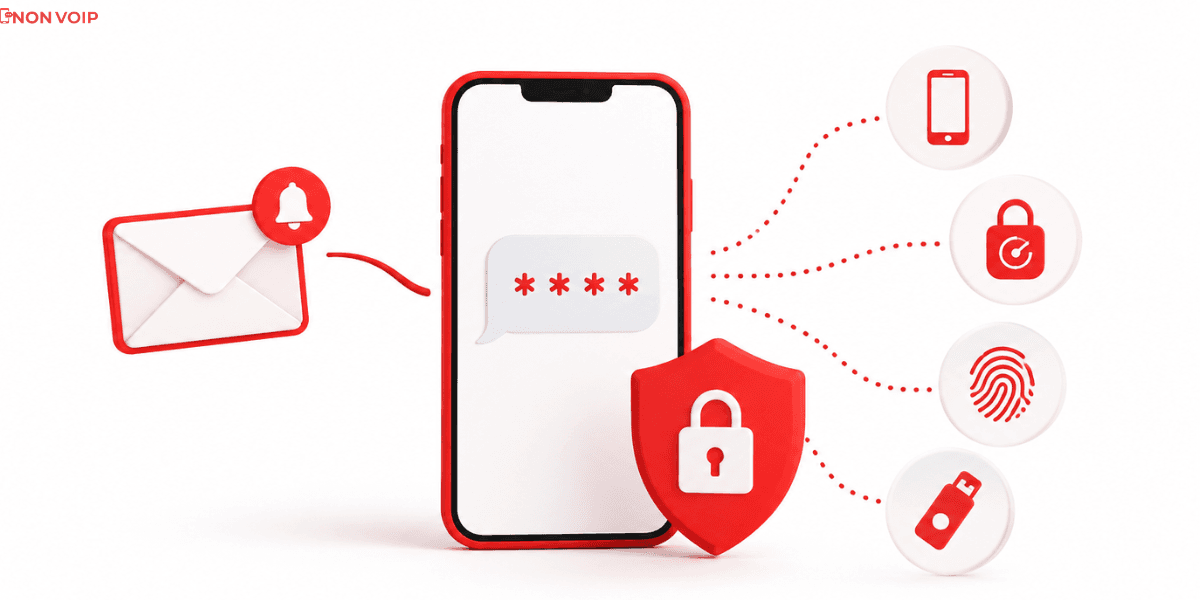
The Short Message Service (SMS) was never designed to be a security tool.
Born within 2G networks as a simple way to send short texts, it remained a tool for entertainment and alerts for years. What changed its function was that passwords alone were no longer sufficient.
Passwords get stolen, reused, and guessed, forcing websites to require a "second factor" to prove that the person trying to log in actually holds something belonging to the account owner.
This is where SMS verification codes emerged as a ready-made solution. While not the most secure, they were the easiest: they require no extra hardware or software, and users understand them intuitively.
After Google introduced two-step verification in 2011, the same approach rapidly spread across banks, social media platforms, and e-commerce sites.
Read more about How the Verification Code Reaches Your Phone & Why It Delays
Why Is a Phone Number Treated as Proof of Identity?
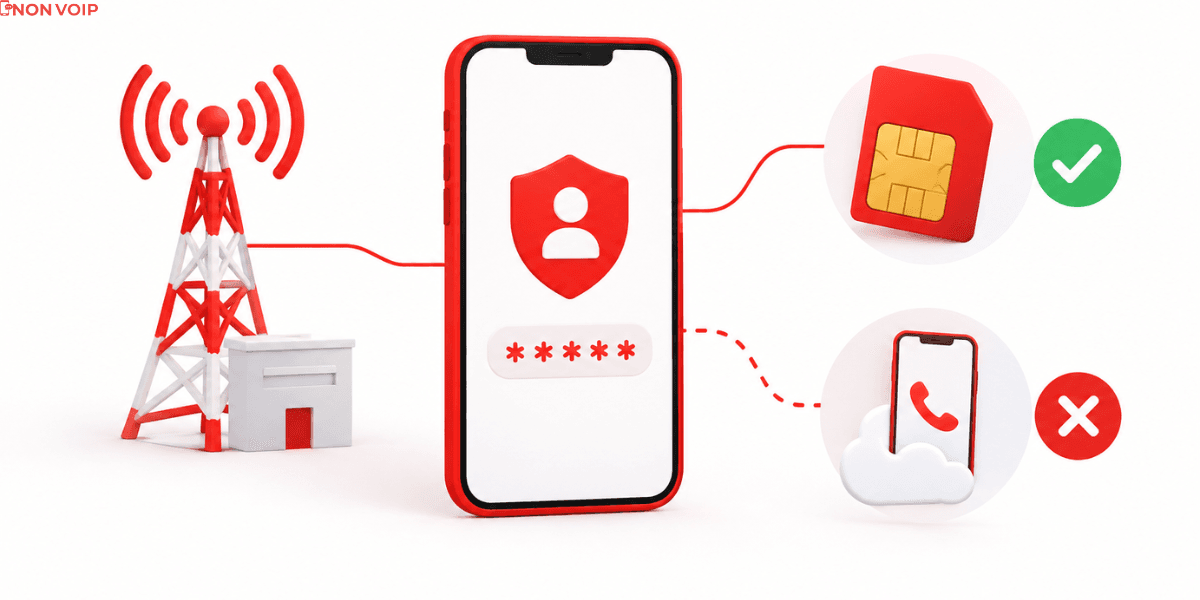
Behind this trust lies a simple logic: obtaining a phone number linked to a physical SIM card and a telecom company requires specific steps and costs. Therefore, it is difficult to generate thousands of real numbers with the same ease as generating thousands of email addresses. This is what makes platforms consider the phone number a reliable "second factor" that reduces duplicate and automated accounts.
Platforms also treat the type of number itself as a signal. A 2016 draft of NIST guidelines stipulated that the verifying entity must ensure the registered number is not linked to a software-based service (VoIP) before relying on it over the public telephone network.
In other words, trust is built not just on the message, but on the network transmitting it. VoIP numbers drag platforms back to the exact same email dilemma, as they can be easily and anonymously generated via software.
This distinction made the traditional phone number a legal identity anchor backed by real data, pushing banks and platforms to adopt it as a quick, stopgap solution.
However, as subsequent NIST updates would reveal, this solution carried the seeds of its own security demise.
What Are the Main Security Vulnerabilities of SMS Verification Codes?
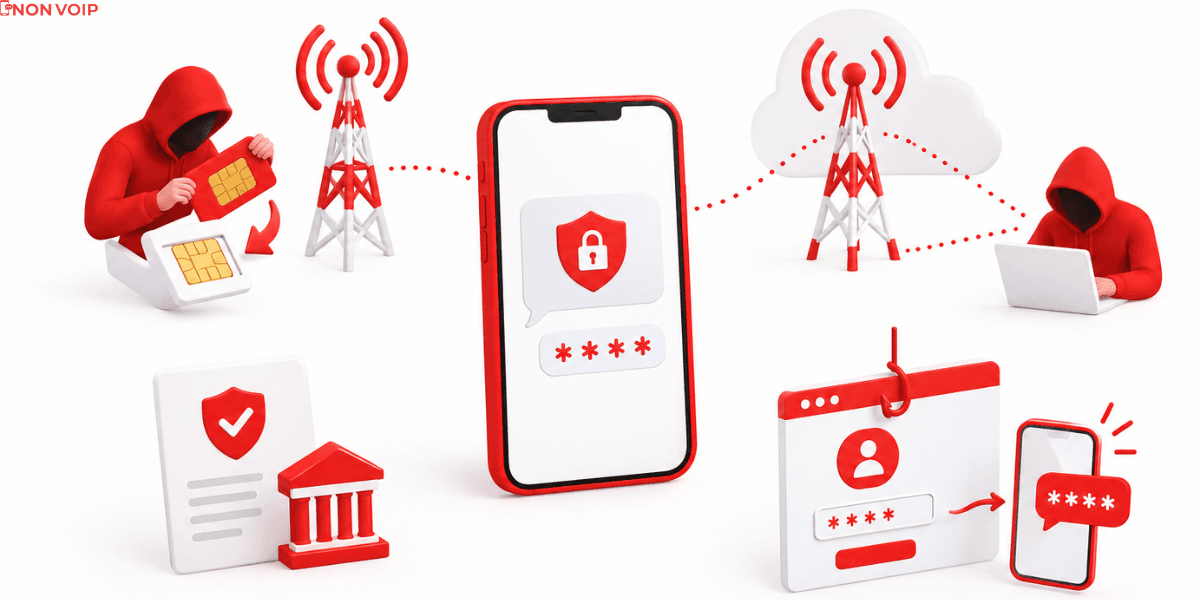
Despite their widespread use, text messages are not immune to criticism. The most prominent known weaknesses include:
SIM Swapping: The attacker convinces the telecom company to transfer the victim’s number to a SIM card in their possession, routing the messages to the hacker instead of the owner. This happened to Twitter founder Jack Dorsey's account in 2019 and frequently targets cryptocurrency investors.
Network Interception: Vulnerabilities in communication protocols like SS7 theoretically allow messages to be intercepted.
Real-Time Phishing: A fake page asks you for the code the moment it arrives and uses it instantly, bypassing the protection of it being a one-time use code.
This is why NIST tightened its SP 800-63B guidelines. Text messages were described in the 2016 draft as "Deprecated" with the possibility of future removal, though the final 2017 version retained them as a "Restricted" method requiring additional risk controls.
Details can be found in the official NIST guidelines and TechCrunch's coverage of the draft.
Why Do Websites Continue to Use Text Messages Despite Their Weak Security?
The simplest reason is that it works for everyone. Anyone who doesn’t own a modern smartphone or cannot install an authenticator app can still receive a text message.
Security analyses suggest that the debate over abandoning them revolves around finding an alternative that can cover all users, rather than denying the existence of the vulnerability itself.
Furthermore, services relying on them always need an account recovery and number change mechanism—a mechanism that itself can become a weak point if not carefully designed.
What Is the Future of Account Security as the Role of SMS Declines?
The industry is shifting toward methods that do not rely on telecommunication networks at all.
Authenticator apps generate the code on the device itself, and Passkeys replace both the password and the code with a cryptographic signature linked to the device, making them phishing-resistant because they only work on the authentic website.
Nevertheless, text messages are expected to remain a fallback option for years because they are the most widely distributed, and because companies fear the complex tech support costs associated with a complete transition.
But today's biggest challenge lies in the 'weakest link' dilemma: what is the point of locking the front door with phishing-resistant Passkeys if the back door for account recovery still opens with SMS verification codes that can be stolen through basic social engineering?
How Can You Protect Your Digital Accounts from SMS Hacking Risks?
A few simple steps can reduce the risks associated with text messages:
Enable an authenticator app or a Passkey whenever a platform offers it instead of SMS verification codes.
Add a PIN or password to your telecom account to mitigate the risk of SIM swapping.
Never share your verification code with anyone, even if they claim to be from tech support.
Always verify the website URL before entering any code, as phishing relies on pages that look exactly like the original.
Ensure the phone number registered with important services is one you control and maintain. Remember that abandoning or failing to recharge your SIM might lead the telecom company to sell your number to a new user who could then access your accounts.
Frequently Asked Questions (FAQ)
How did the text message become a sign of trust on the internet?
Because it is the most widespread and easiest second factor to implement, and because a phone number linked to a real SIM is difficult to mass-replicate, platforms have relied on it ever since Google introduced two-step verification in 2011.
Are text messages a secure verification method?
Yes, but with limits. While better than relying on a password alone, they are technically weaker than authenticator apps and passkeys due to risks like SIM swapping and real-time phishing.
What is the difference between "Deprecated" and "Restricted" in NIST guidelines?
The 2016 draft described SMS as deprecated and liable for future removal, while the final 2017 version kept it as a restricted method requiring additional risk mitigation controls.
Will text messages disappear as a verification method?
They will likely decline gradually as Passkeys spread, but they will remain a fallback option for a while because they work on any phone, and because government institutions and public services are relatively slow to transition to complex cryptographic alternatives, preferring to rely on existing traditional infrastructure.
Conclusion
The text message began as a holiday greeting and ended up acting as the key to our digital accounts.
This shift didn’t happen through a calculated decision, but simply because it was available to everyone when the world needed a straightforward way to prove identity.
Understanding this history helps us use SMS verification codes mindfully, and transition to stronger alternatives as soon as they become available.