You open a new app, type in your phone number, and wait for those crucial few seconds. Suddenly, your screen lights up with a six-digit message; you type it in and forget about it instantly to start browsing your new account.
But have you ever wondered how the verification code reaches your phone?
Behind those few seconds lies a surprisingly complex technical journey that crosses thousands of miles through servers, international networks, and communication gateways just to ensure that this secret code reaches you, and only you, at the exact right moment.
Quick Summary (TL;DR)
An OTP journey is not just a regular message. If you are looking for an exact answer to how the verification code reaches your phone, it comes down to a technical path:
The site's server generates the code randomly, sends it to an SMS gateway, that gateway routes it through a mobile network protocol (SMPP) to your carrier, and the carrier's network delivers it to your handset via its SMS center (SMSC).
All of this happens within seconds, and the code itself is built to work only once and for a short window of time for security reasons.
To ensure this path is not disrupted by filters targeting virtual numbers, using real SIM-based numbers like those provided by the Non-VoIP platform is the best technical solution to receive the code instantly and securely.
How the Verification Code Reaches Your Phone?
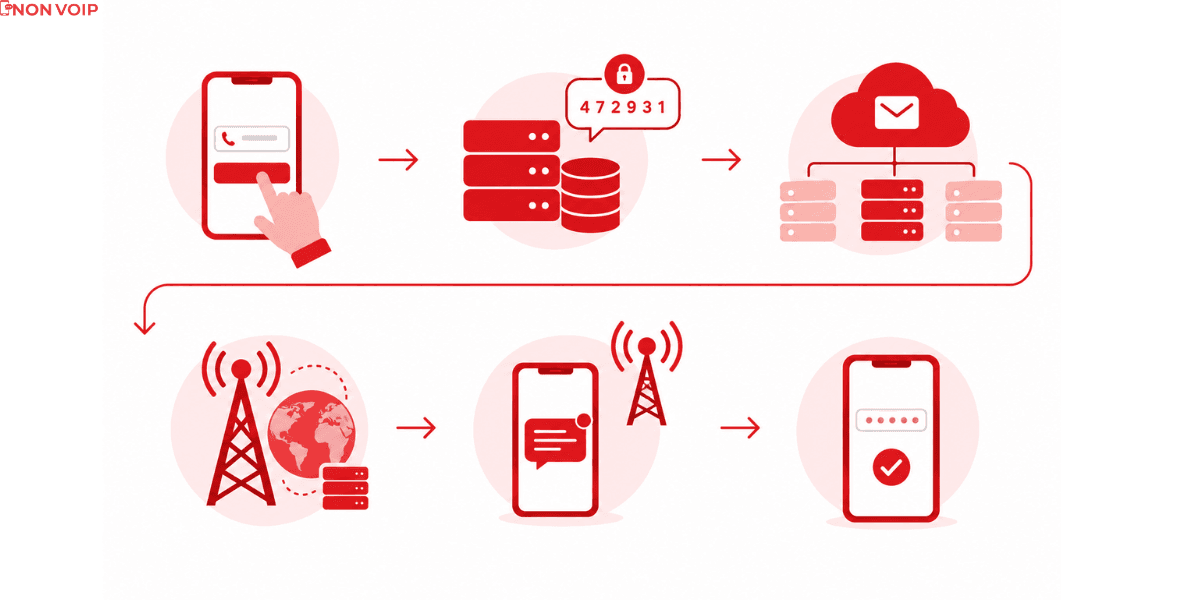
The journey starts the moment you enter your phone number into a signup form, and moves through several consecutive stages:
- Code generation: the website or app's server generates a random number (usually 4 to 6 digits) using a secure algorithm, and stores it temporarily in a database linked to your phone number.
- Sent to an SMS gateway: the server passes the code to a specialized messaging provider (an SMS gateway or CPaaS platform) via an API request, an intermediary built specifically to deliver text messages.
- Routed through the SMPP protocol: the gateway uses a protocol called SMPP to hand the message off to your carrier, and the message may pass through more than one international intermediary if your number belongs to a different country than the messaging provider.
- Arrival at the carrier's network: your carrier receives the message through its own SMS center (SMSC), the system responsible for storing the message and retrying delivery if your phone is temporarily offline.
- Delivery to your phone: the message is finally pushed to your handset through the nearest cell tower, landing in your inbox within seconds of the journey starting.
- Final verification: when you type the code into the app, the server compares it against the value it stored earlier, if they match, your verification code confirmation completes, and your session or account is activated.
Why Is a Verification Code Used Only Once?
An OTP isn't meant to be reused, and that's a deliberate security measure rather than an arbitrary limitation:
- Short expiration window: most codes expire within a few minutes, reducing the chance they could be exploited if intercepted.
- Single use only: once a code is successfully verified, it's deleted from the database and can't be used again.
- Direct proof of phone access: entering the correct code proves the person currently has access to that specific phone number.
- Limited retry attempts: most systems cap how many times a code can be entered incorrectly, blocking automated guessing attempts.
What Happens When a Code Is Delayed or Doesn't Arrive?
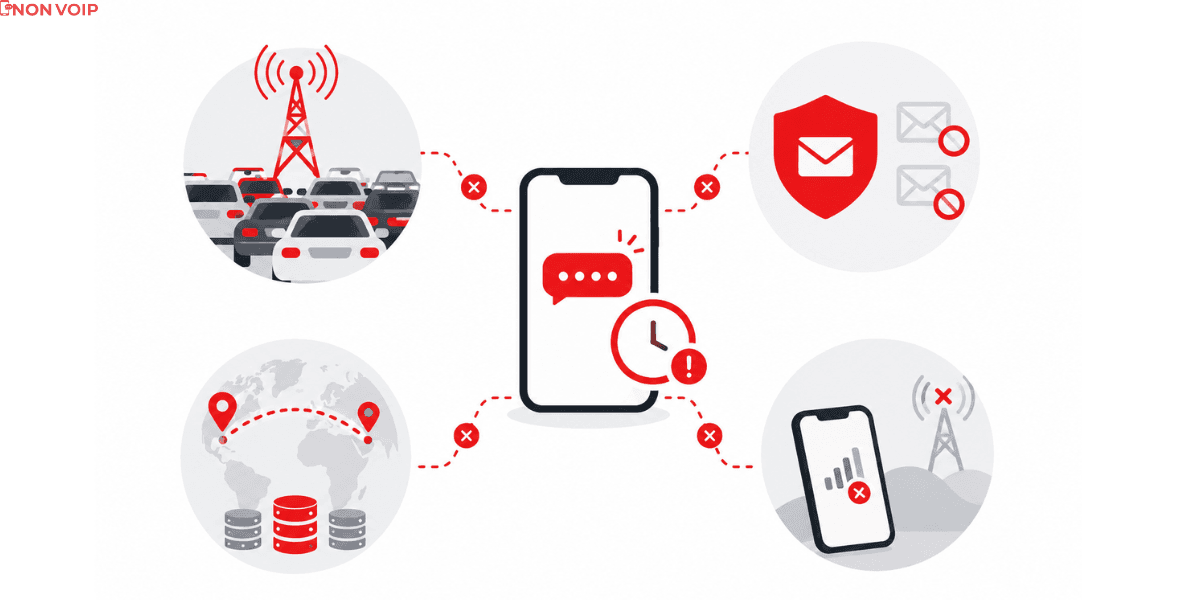
Even though the journey usually takes just a few seconds, understanding exactly how the OTP reaches your phone helps you realize why a code can sometimes be delayed or fail to arrive due to technical roadblocks:
- Network congestion: heavy traffic on a carrier's network at a given moment can slow down text message delivery overall.
- Spam-filtering systems: some carriers filter out messages that resemble marketing or suspicious patterns.
- International routing: if the messaging provider operates from a different country than your phone number, the message passes through extra intermediaries that can add delay.
- Weak coverage or a disconnected phone: if your phone is out of network range at the moment of sending, the SMS center holds the message and retries once the connection returns.
SMS Codes vs Authenticator Apps
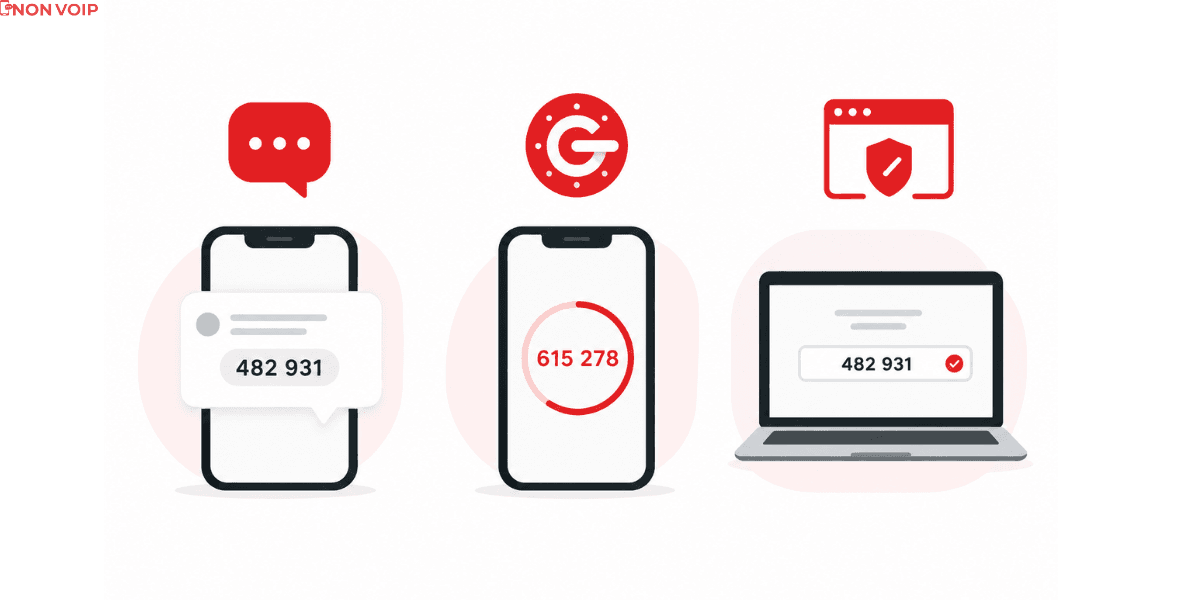
While SMS-based verification remains the most common method, taking a deeper look at how the OTP reaches your phone explains why some technical alternatives exist for confirming identity:
- SMS messages: the easiest for users, though delivery depends on the carrier network and can occasionally be delayed.
- Authenticator apps: generate the code locally on the device without needing a network connection, making them faster and, in some respects, more secure.
- WebOTP technology: a modern web standard that lets browsers automatically read the code from an incoming text message and fill it in without manual input, as described in Mozilla's official WebOTP API documentation.
The Role of the Non-VoIP Platform in Ensuring Safe OTP Delivery
To bypass blocking filters and ensure the code's delivery journey is successfully completed, professionals resort to using real, dedicated numbers.
This is where the Non-VoIP platform stands out as a technical solution providing US and global numbers linked to physical SIM cards (SIM-based), allowing SMS Gateways to recognize them as trusted numbers and pass the verification code immediately.
The Non-VoIP platform features a professional environment that supports the stability of your communication:
Global Coverage and Multiple Servers: The platform offers numbers from over 150 countries, with the freedom to choose among several servers that allow you to receive Multi-Messages or retain the number for Reuse later to seamlessly bypass Two-Factor Authentication (2FA).
Advanced Developer Dashboard (API): Allows programmers and business owners to programmatically integrate verifications into their systems, generating access keys and Webhooks to receive OTP codes automatically without manual intervention.
Absolute Financial Transparency (No SMS = No Payment): Because technology can sometimes face delays, the system guarantees an instant and automatic refund to your balance if the request's timer expires without the verification code arriving.
Profitable Referral Program: Turn your network into a source of income! Share your referral code to give your friends a 50% discount on their first activation, and you earn a permanent 3% commission added to your balance (which can be withdrawn as USDT cash or reused on the platform).
Frequently Asked Questions
How does a verification code travel from a website to your phone?
It passes through several stages: generation on the website's server, delivery to an SMS gateway, routing via the SMPP protocol to your carrier, and final delivery through the carrier's SMS center, typically within seconds.
Why do verification codes expire so quickly?
To limit the window in which the code could be misused if it fell into the wrong hands, each code is designed to be valid for a short time and for a single use only.
Why does a verification code sometimes arrive late?
Common causes include network congestion, spam-filtering systems, routing through international intermediaries, or weak signal coverage at the moment of sending.
Are authenticator apps better than SMS codes?
Generally yes, from a security standpoint, since the code is generated locally on the device and doesn't depend on network delivery, but SMS remains more widespread and easier for the average user.
Final Thoughts
Those few seconds between tapping "send code" and seeing it appear on your screen feel simple, but they're actually a journey through several interconnected systems and networks, each built to get that code to you quickly and securely.
Understanding this journey makes it easier to see why a code is sometimes delayed, and why this small step matters for protecting your account.