You open a social platform or a digital forum, create an account under a pseudonym, upload an avatar that looks nothing like you, and start interacting with others with complete freedom.
This scenario isn't limited to hackers or people hiding for suspicious reasons; millions of regular users do it every day.
If you are wondering why building a second online identity, it goes beyond mere entertainment. It is a reflection of a digital reality that imposes complex challenges on our privacy and our psychological need to express ourselves without restrictions.
Quick Summary (TL;DR)
Millions of users resort to
building a second online identity for several fundamental reasons, most notably: protecting personal data from tracking, expressing opinions freely without fearing judgment from family or coworkers, and strictly separating professional and personal lives.
To achieve this separation, the technical challenge lies in account verification requirements.
This is where platforms like Non-VoIP play a crucial role by providing real phone numbers to activate these accounts without ever linking them to the user's personal phone number.
Why Do People Build a Second Identity Online?
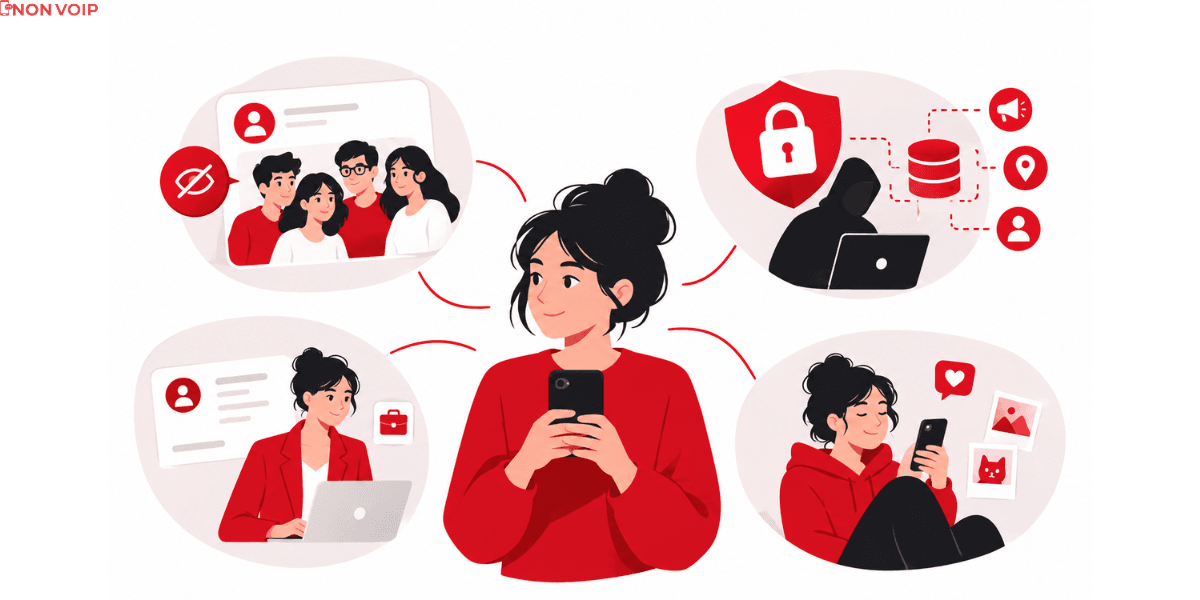
There is no single reason explaining this trend; rather, it is a mix of psychological, social, and security motives driving users to separate their real lives from their digital footprint. Here are the top reasons:
1. Escaping the "Inner Circle" and Prejudgments
On our official accounts, we are surrounded by family, friends, and coworkers. This presence enforces harsh self-censorship; a person might hesitate to share a political view, discuss a mental health struggle, or even join specific niche communities (like gaming or arts) for fear of criticism. A second identity gives the user a safe space to express their true thoughts without social judgment.
2. Security Protection and Resisting Privacy Invasions
Data is the new oil, and tech companies harvest every click and move you make. Using your real name and primary number on every app makes you an easy target for targeted ads, data tracking, and even hacks. Building a second digital identity acts as a firewall, preventing your various activities from being linked back to your real personal profile.
3. Strict Separation Between Professional and Personal Life
Many freelancers, content creators, and executives prefer building a digital identity dedicated solely to work. This separation ensures their serious professional image doesn't overlap with their personal hobbies, and protects them from clients intruding into their private lives outside working hours.
4. Escaping the Pressure of Digital "Perfection"
Major platforms like Instagram and LinkedIn impose an invisible pressure to appear perfect (constant success, ideal happiness). Alternative identities (often known as Finsta accounts) allow users to just be themselves, sharing ordinary moments or even failures with a small community that accepts them without pretense.
Read more about How to Verify Your Accounts Without Handing Your Privacy to Big Tech
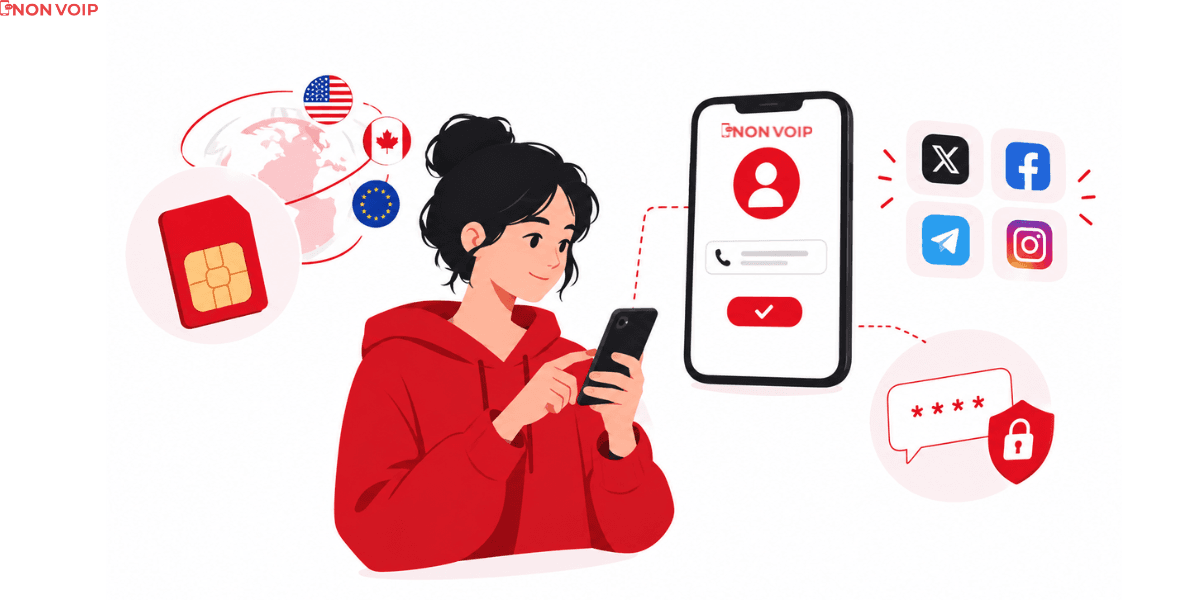
When you decide to build a second identity, you will immediately hit a strict technical barrier: social apps require a phone number to verify the account.
Using your personal number simply means exposing your real identity and linking your alternative account to your contacts (as apps will automatically sync and suggest your new account to your friends and family).
To bypass this trap, the Non-VoIP platform is the professional technical solution that guarantees the independence of your alternative identity by providing:
Real numbers (SIM-based): Providing real US and global numbers that seamlessly bypass website filters which block free virtual numbers.
Complete privacy and isolation: You can use this number to verify your new account (like X, Facebook, or Telegram) and receive the OTP instantly, ensuring this account is never linked to your personal number or your contacts.
Fast registration and financial protection: The platform guarantees an automatic refund (No SMS = No Payment) if the code is delayed, providing a secure and transparent environment to build and manage your multiple digital identities easily.
Frequently Asked Questions (FAQ)
Is building a second online identity legal?
Yes, using a pseudonym or an alternative identity to protect your privacy and express yourself freely is completely legal and a legitimate right, as long as it is not used for fraud, impersonation, or harming others.
How do apps discover my real identity even if I use a pseudonym?
You are often exposed through the "phone number" used for registration, as apps sync your contacts and suggest your new account to people you know. To avoid this, you must use a completely separate phone number (like the numbers provided by the Non-VoIP platform).
What is the difference between an alternative identity and fake accounts (Bots)?
An alternative identity is managed by a real, human person interacting naturally to protect their privacy, whereas fake accounts (Bots) are run by automated software to manipulate algorithms, spread spam, or mislead public opinion.
Final Thoughts
Building a second online identity is neither strange nor suspicious in itself. It is a reflection of ancient human needs such as privacy, experimentation, and belonging, which have found a new medium of expression.
The important thing is that the pseudonym remains a safe space for expression, not a shield to harm or deceive others.