 Blog Non-VoIP
Do you view AI merely as ChatGPT writing emails or designing images? If that’s your perspective, you’re only seeing the tip of the iceberg!
By 2025, Artificial Intelligence will have become an essential part of the infrastructure upon which the entire Internet is being rebuilt. This shift has forced a comprehensive redefinition of two fundamental concepts: How do companies make money? How can users protect their data in light of this evolution?
In this detailed guide, we will explain the impact of AI on profit and privacy, how AI has changed the rules of the game, and how you can adapt to these changes to protect your data and ensure the continuity of your online earnings.
What Profit Opportunities Has AI Created for Users?
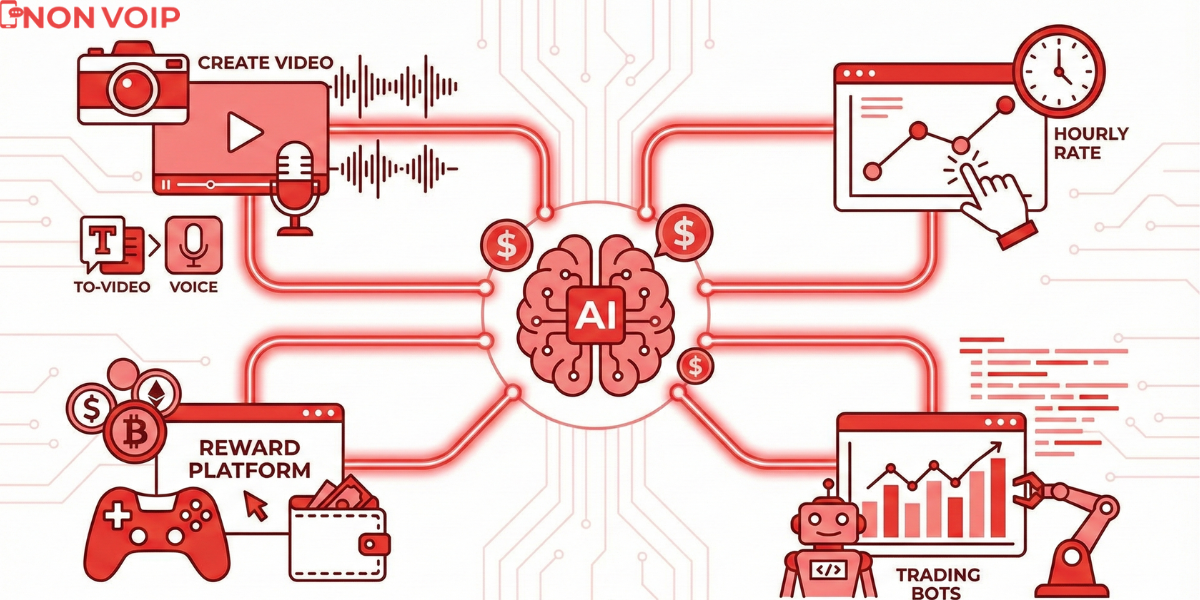
Earning income no longer relies solely on manual effort. AI has introduced the concept of Smart Automation, creating a multitude of new profit avenues:
- Automated Content Creation: Tools like Sora and Runway transform text into video, while tools like ElevenLabs produce voiceovers indistinguishable from humans. The result? A single person can manage an entire network of channels.
- Data Training: Platforms like Outlier AI pay hourly rates to correct and refine AI responses. This is also the foundation of work on platforms like Clickworker and UHRS, which rely on users to train Microsoft’s algorithms.
- Web3 Opportunities: Play-to-Earn (P2E) games and reward platforms (such as Freecash) use AI to optimize offers, opening up opportunities to earn $1–$20 daily.
- Coding and Trading: AI-powered bots now monitor markets, and tools like GitHub Copilot write code for non-programmers.
Read more about the best survey sites for 2025
How Do Companies Use AI to Predict What You Will Buy?
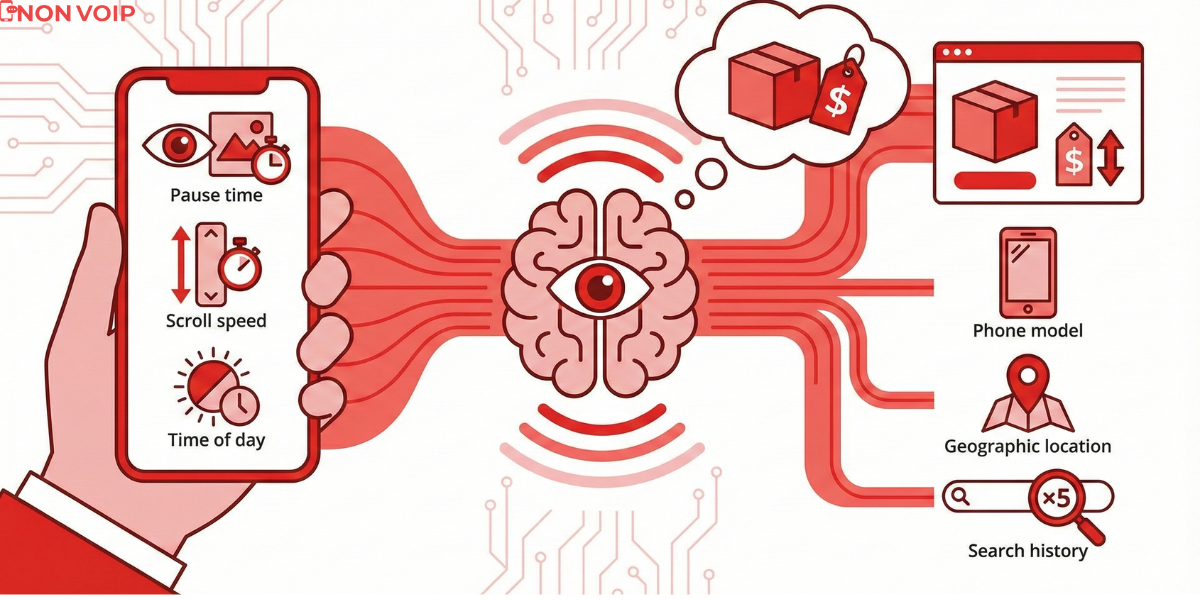
Corporations have moved from traditional methods based solely on direct advertising to highly complex predictive models.
It’s all about the data! But how exactly do companies use AI to predict what you will buy before you even ask for it?
1. Predictive Personalization
Machine learning algorithms don’t just analyze your past purchases; they monitor your real-time behavior with terrifying precision:
- How many seconds did you pause on a specific image?
- What is your screen scroll speed?
- At what time of day do you hold your phone?
Did you know that 75% of Netflix views come from AI recommendations? Companies are no longer selling you a product as they did in the past; they are selling you a prediction of a need before you even realize you have it!
2. Real-Time Dynamic Pricing
Have you ever noticed a product’s price online changing within seconds? This is due to Dynamic Pricing, which determines the price based on your financial capacity and urgency, not the product’s value.
AI studies your data in a fraction of a second to determine the highest price you are willing to pay. Companies like Uber have achieved a revenue increase of approximately 20% thanks to dynamic pricing strategies that analyze:
- Your phone model (Is it the latest model? Then you have money).
- Your geographic location.
- Your search history (Searching for this product for the fifth time? Then you are desperate to buy).
To escape this trap, you must appear to the system as a completely new user. This requires more than just clearing cookies; it requires a clean digital identity and a new phone number that hasn’t been registered before.
Can AI Identify You Without You Providing Your Name?
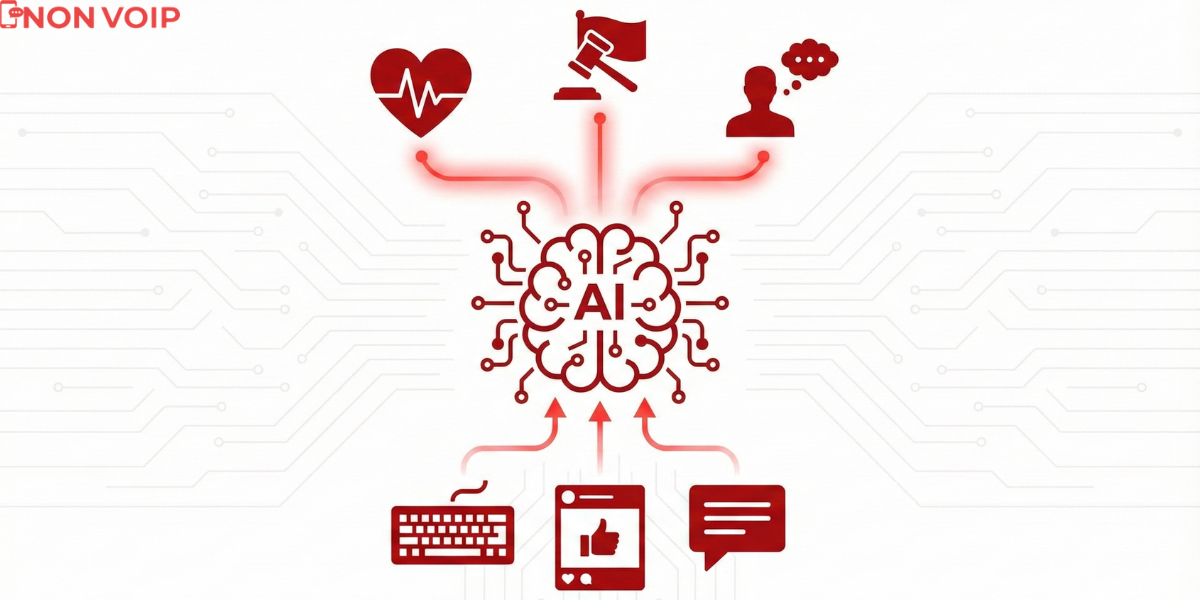
Yes, with up to 95% accuracy through data linkage and inference! The old saying “If the service is free, you are the product” is over. The new rule is: “You are not the product; you are the data training the AI model.”
But how? Technical studies have shown that AI neural networks can infer highly specific details about you, such as:
- Your health status
- Your Purchasing Power
- Your Psychological State
- Your personal inclinations
This is done simply by analyzing patterns like your typing style, the type of posts you interact with, and your comments!
Why Are Old Protection Tools No Longer Effective?
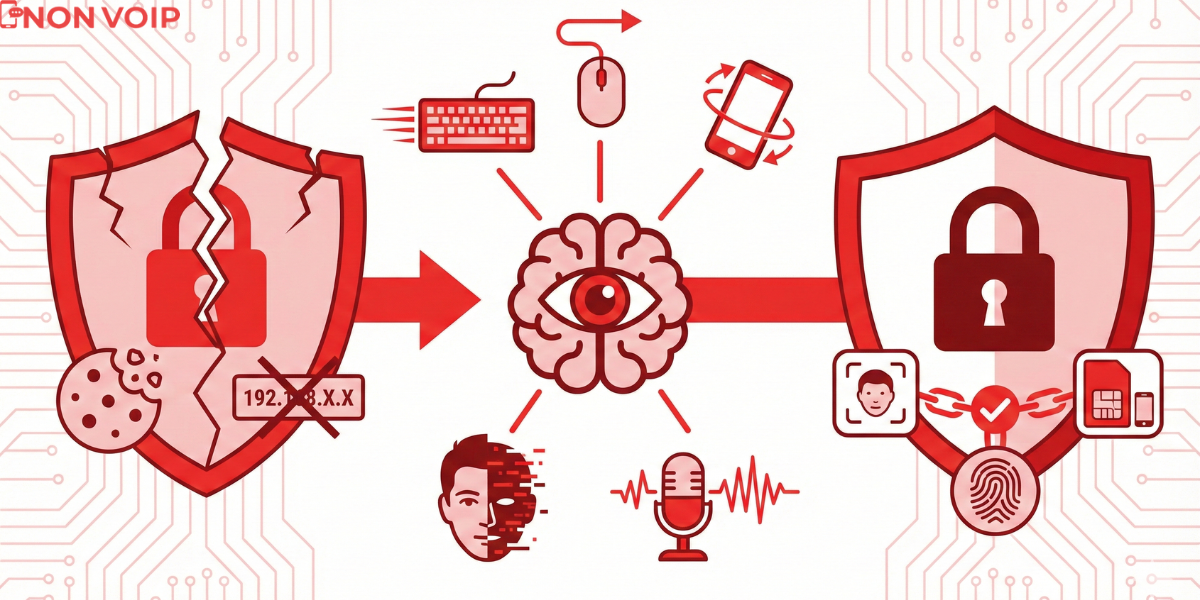
To fully understand the impact of AI on profit and privacy, we must realize that traditional protection methods are no longer sufficient for two reasons:
1. Behavioral Biometrics
In the past, websites relied on Cookies and IP addresses to identify users. Now, AI algorithms rely on advanced analysis of Behavioral Biometrics, such as:
- Your typing speed on the keyboard.
- The way you move your mouse.
- The angle at which you hold your phone (via the gyroscope).
Even if you change your IP or browser, AI systems can distinguish your unique behavior, making evasion or spoofing difficult.
However, these technologies are not 100% foolproof and rely on combining multiple behavioral indicators with other data to enhance accuracy.
Read more about how to protect your digital footprint from hackers
2. Deepfakes
With AI’s ability to generate realistic images and voices increasing by 3000% since 2023, the trust banks and work platforms place in selfies or voice biometrics alone has eroded.
This hasn’t led institutions to abandon these tools entirely, but rather to rush towards integrating them with multi-factor authentication procedures.
Instead of relying solely on selfies and voiceprints, they now depend on comprehensive verification systems that include a real phone number linked to a SIM card, because it is difficult to digitally forge—though even this is not a complete substitute without proper precautions.
How Does AI Distinguish Between Real and Free Phone Numbers?
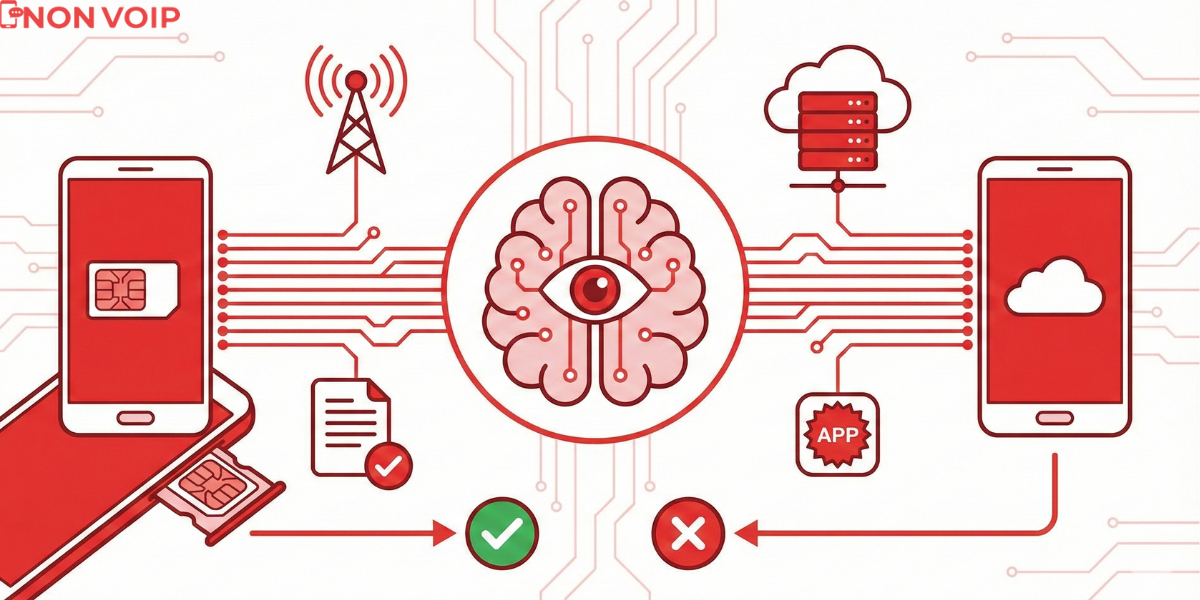
This is the most critical piece of information that most users ignore regarding fake phone number detection. Algorithms search global telecommunications databases for something called (CNAM Data & Carrier Metadata).
- Real Numbers: Appear in the system as originating from Mobile Network Operators (MNOs) like T-Mobile or Vodafone. These companies require ID and contracts to issue a SIM card.
- Fake Numbers: Appear in the system as originating from cloud servers. The AI algorithm sees this classification and immediately knows the number was purchased from an app or website and has no real person behind it.
Check out our article on the difference between VoIP and Non-VoIP numbers
What Is the Solution to Survive This? The Role of Non-VoIP Numbers
To protect your profits and data, the solution lies in Total Identity Separation. This is where Non-voip comes in, offering you the missing link: real numbers issued by actual telecom companies.
- Want to earn from Freecash? Use a real US number from Non-voip to appear as a US citizen and bypass the ban.
- Want to avoid Dynamic Pricing? Enter with a new number from Non-voip and a clean identity to get the cheapest price.
- Want to protect your account? Link it to a physical number from Non-voip that cannot be hacked.
How to Protect Yourself from This Tracking?
To protect your earnings and data from tracking in the AI era, follow these crucial points:
- Use new, real phone numbers linked to a physical SIM for every digital account.
- Minimize repetitive digital footprints by not using the same browser or network for more than one account.
- Utilize Incognito mode and change your IP address regularly via a reliable VPN to prevent tracking of your location and browsing behavior.
- Clean your Cookies regularly and clear browsing data to prevent linking current activity with the past.
- Be cautious with your online activity; provide the minimum amount of personal data and avoid excessive interaction with content that could be used to analyze your behavior.
- Consider using privacy-enhancing tools like tracker blockers and encryption in communications to protect your data.
-
Read privacy policies and understand how platforms use your data.
Is AI a Friend or Foe?
Artificial Intelligence has turned the Internet into a gold mine, but it is also mined with privacy risks.
You cannot fight technology with boycotts, but you can fight it with intelligence by leveraging the profit opportunities has AI created while protecting your privacy with effective measures that sufficiently mask your identity.